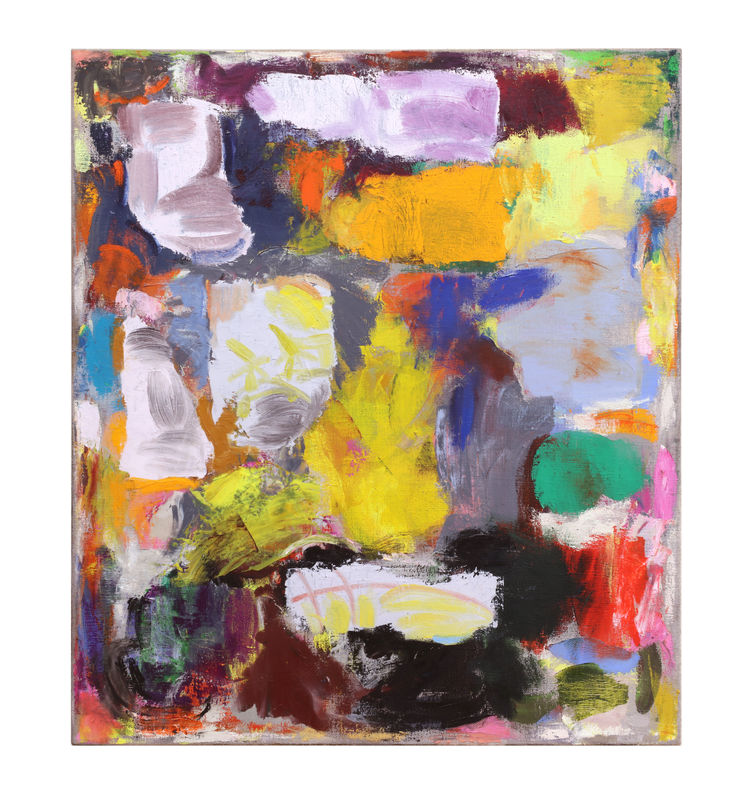
Chromatic Renaissance - Ingrid Floss: con contributo critico di Kulia Berghoff

27 November 2025 - 31 January 2026
ABC-ARTE è lieta di presentare Chromatic Renaissance, la nuova mostra personale dell’artista tedesca Ingrid Floss, che inaugurerà giovedì 27 novembre 2025 nella sede milanese della galleria, ABC-ARTE ONE OF, in via Santa Croce 21.
 
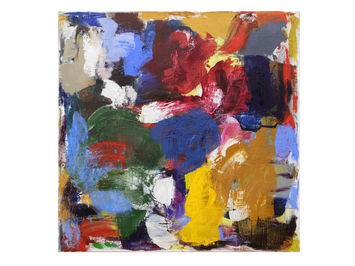
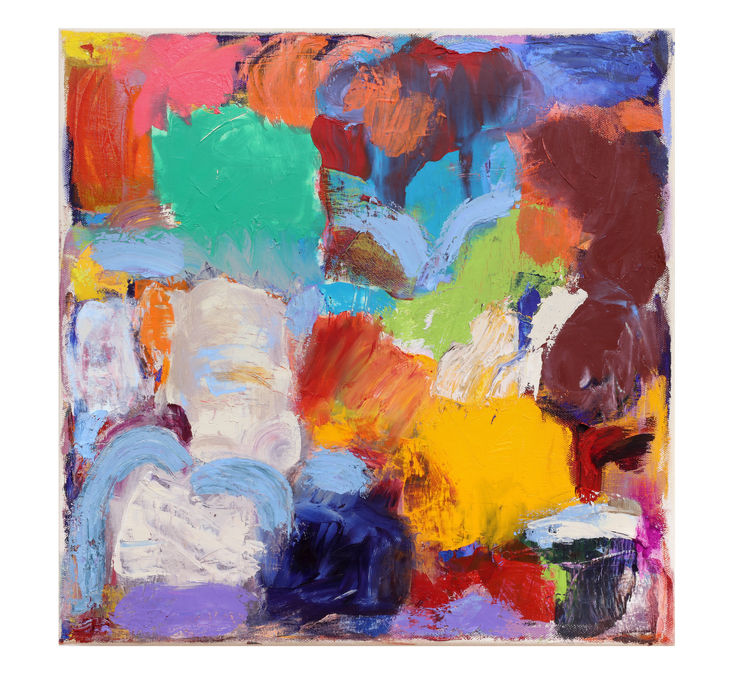
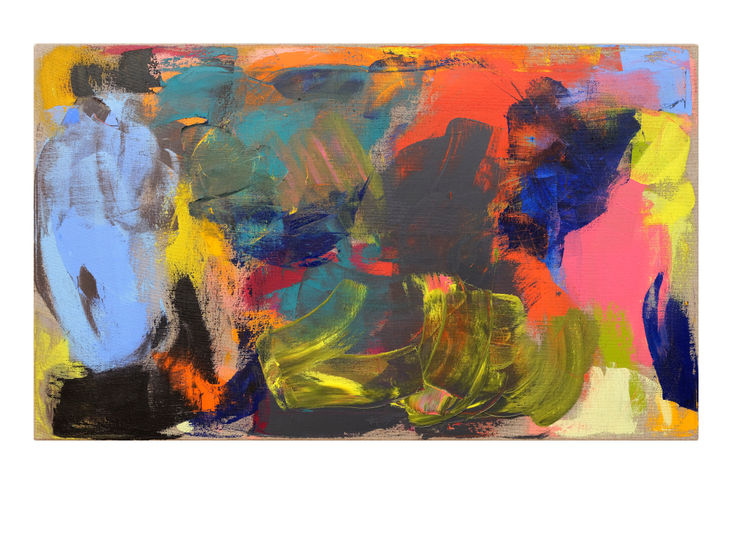
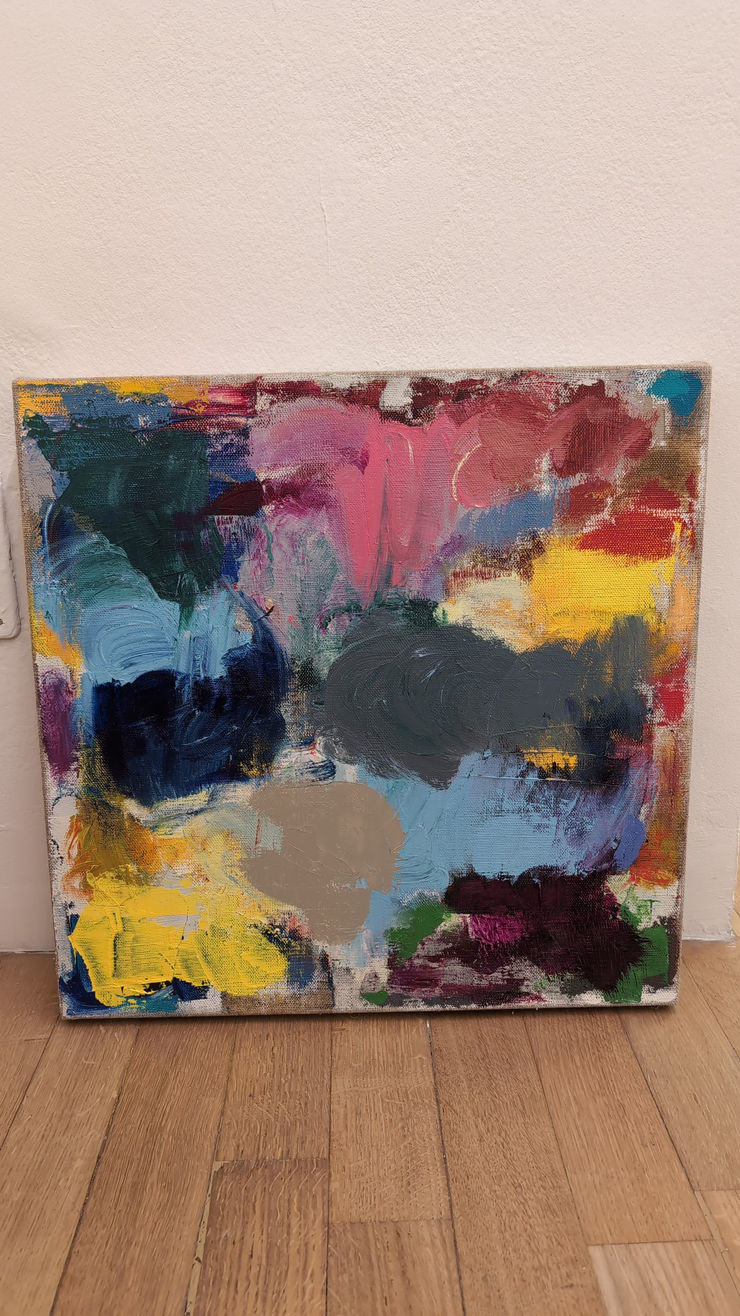
Con questa mostra, Floss approfondisce la sua indagine sulla relazione tra intuizione e controllo, equilibrio e trasformazione. Le sue opere, dense di materia e attraversate da campi di colore vibranti, nascono da un processo pittorico che alterna gesti impulsivi e momenti di riflessione, in cui l’artista ricerca un’armonia tra energia e calma, caos e ordine.
 
Chromatic Renaissance è un viaggio nel potere rigenerativo del colore, inteso come forza spirituale e vitale. Nelle tele di Floss, le stratificazioni cromatiche si trasformano in spazi interiori dove la luce sembra emergere dall’interno, suggerendo un dialogo continuo tra visibile e invisibile.
 
Il titolo della mostra trae ispirazione da un progetto musicale dedicato ai compositori rinascimentali italiani, recentemente pubblicato dall’etichetta Winter & Winter di Monaco, che presenta un dipinto di Floss in copertina. Come nella musica, anche nella sua pittura ogni tono diventa una voce, ogni luce una risonanza.
No images available.
  • Installation Views

  • Artworks

    • Ingrid Floss Untitled, 2022 - 2025 50 x 50 cm 19 3/4 x 19 3/4 in
      Ingrid Floss
      Untitled, 2022 - 2025
      50 x 50 cm
      19 3/4 x 19 3/4 in
    • Ingrid Floss Untitled, 2025 50 x 50 cm 19 3/4 x 19 3/4 in
      Ingrid Floss
      Untitled, 2025
      50 x 50 cm
      19 3/4 x 19 3/4 in
    • Ingrid Floss Untitled, 2025 60 x 60 cm 23 5/8 x 23 5/8 in
      Ingrid Floss
      Untitled, 2025
      60 x 60 cm
      23 5/8 x 23 5/8 in
    • Ingrid Floss Untitled, 2025 80 x 120 cm 31 1/2 x 47 1/4 in
      Ingrid Floss
      Untitled, 2025
      80 x 120 cm
      31 1/2 x 47 1/4 in
    • Ingrid Floss, Untitled, 2025
      Ingrid Floss, Untitled, 2025
    • Ingrid Floss, Untitled, 2025
      Ingrid Floss, Untitled, 2025
    • Ingrid Floss Murnau Field, 2025 60 x 100 cm 23 5/8 x 39 3/8 in
      Ingrid Floss
      Murnau Field, 2025
      60 x 100 cm
      23 5/8 x 39 3/8 in
    • Ingrid Floss Red in the Middle, 2025 80 x 120 cm 31 1/2 x 47 1/4 in
      Ingrid Floss
      Red in the Middle, 2025
      80 x 120 cm
      31 1/2 x 47 1/4 in
    • Ingrid Floss Blue Land, 2025 50 x 50 cm 19 3/4 x 19 3/4 in
      Ingrid Floss
      Blue Land, 2025
      50 x 50 cm
      19 3/4 x 19 3/4 in
    • Ingrid Floss Glow, 2025 60 x 100 cm 23 5/8 x 39 3/8 in
      Ingrid Floss
      Glow, 2025
      60 x 100 cm
      23 5/8 x 39 3/8 in
    • Ingrid Floss Grey, 2025 100 x 100 cm 39 3/8 x 39 3/8 in
      Ingrid Floss
      Grey, 2025
      100 x 100 cm
      39 3/8 x 39 3/8 in
    • Ingrid Floss Lemon Sky, 2025 80 x 120 cm 31 1/2 x 47 1/4 in
      Ingrid Floss
      Lemon Sky, 2025
      80 x 120 cm
      31 1/2 x 47 1/4 in
    • Ingrid Floss Midnight Garden, 2025 80 x 120 cm 31 1/2 x 47 1/4 in
      Ingrid Floss
      Midnight Garden, 2025
      80 x 120 cm
      31 1/2 x 47 1/4 in
    • Ingrid Floss, To the Edge, 2025
      Ingrid Floss, To the Edge, 2025
    • Ingrid Floss Blue, 2025 60 x 60 cm 23 5/8 x 23 5/8 in
      Ingrid Floss
      Blue, 2025
      60 x 60 cm
      23 5/8 x 23 5/8 in
    • Ingrid Floss Cat ate the Mouse, 2024 70 x 70 cm 27 1/2 x 27 1/2 in
      Ingrid Floss
      Cat ate the Mouse, 2024
      70 x 70 cm
      27 1/2 x 27 1/2 in
    • Ingrid Floss, Cool Blue, 2022 - 2025
      Ingrid Floss, Cool Blue, 2022 - 2025
    • Ingrid Floss, Air, 2025
      Ingrid Floss, Air, 2025
    • Ingrid Floss For Hans, 2024 - 2025 80 x 70 cm 31 1/2 x 27 1/2 in
      Ingrid Floss
      For Hans, 2024 - 2025
      80 x 70 cm
      31 1/2 x 27 1/2 in
    • Ingrid Floss, Murnau Light, 2023
      Ingrid Floss, Murnau Light, 2023
    • Ingrid Floss, Rooted, 2022
      Ingrid Floss, Rooted, 2022
    • Ingrid Floss Silver Light, 2025 60 x 60 cm 23 5/8 x 23 5/8 in
      Ingrid Floss
      Silver Light, 2025
      60 x 60 cm
      23 5/8 x 23 5/8 in
    • Ingrid Floss, Small Tempest, 2025
      Ingrid Floss, Small Tempest, 2025
    • Ingrid Floss, Take a walk, 2025
      Ingrid Floss, Take a walk, 2025
    • Ingrid Floss To Masaccio I, 2025 50 x 40 cm 19 3/4 x 15 3/4 in
      Ingrid Floss
      To Masaccio I, 2025
      50 x 40 cm
      19 3/4 x 15 3/4 in
    • Ingrid Floss To Masaccio II, 2025 50 x 40 cm 19 3/4 x 15 3/4 in
      Ingrid Floss
      To Masaccio II, 2025
      50 x 40 cm
      19 3/4 x 15 3/4 in
    • Ingrid Floss, Untitled, 2022
      Ingrid Floss, Untitled, 2022
    • Ingrid Floss, Untitled, 2025
      Ingrid Floss, Untitled, 2025
    • Ingrid Floss Untitled, 2025 60 x 60 cm 23 5/8 x 23 5/8 in
      Ingrid Floss
      Untitled, 2025
      60 x 60 cm
      23 5/8 x 23 5/8 in
    • Ingrid Floss, Untitled, 2025
      Ingrid Floss, Untitled, 2025
    • Ingrid Floss Untitled, 2025 100 x 100 cm 39 3/8 x 39 3/8 in
      Ingrid Floss
      Untitled, 2025
      100 x 100 cm
      39 3/8 x 39 3/8 in
  • Between Intuition and Control: The Balance in the Image in Ingrid Floss, Julia Berghoff

    Between Intuition and Control: The Balance in the Image in Ingrid Floss

    Julia Berghoff

    At first glance, Ingrid Floss’s paintings may appear chaotic, perhaps even overwhelming, due to the immediate flood of stimuli they convey. They are deliberately anything but pleasing and refuse to submit to their surroundings. Yet Floss’s paintings are guided by a profound sense of order. They are carefully balanced, both chromatically and compositionally. Every smallest element in these complex systems is essential to maintaining the fragile balance of the image. As impulsive as they may seem, they are ultimately the result of a guided and conscious process, which gives the works their particular tension.

    Dynamic, gestural color fields overlap or flow around each other like in an organic grid. However, these paintings are not about precision or clearly defined areas. What matters is the interplay of colors and their expansion across the surface. One constantly notices chromatic affinities, such as the complementary contrasts of yellow and blue or red and green. The size of a yellow accent, for instance, depends strongly on its surroundings and its “neighbors.” Is there a balancing counterpart on the opposite side of the image? Or how does the visual weight shift when a green accent is placed right next to it? A puzzle begins to unfold, extending across the entire surface. After each new color field, the artist analyzes how the image has changed and what it now needs compositionally to remain in balance.

    Gray and white play an important role in this process. They loosen up the dense mixture of colors and thus become essential design elements. Sometimes they appear as light accents emerging from the canvas background; at other times they form cloud-like structures around which other color formations press forward powerfully and dissolve again. In doing so, the colored surfaces suddenly become spatial, even physical. They are charged with movement and energy. The dynamic color forms push to the very edges of the canvas, as if the surface were barely sufficient to contain them. They flow into and around one another, compressed into a tight space like an explosive gas mixture.

    Floss’s paintings are full of tension and ultimately demand their space. Since they cannot find it within, they claim it outwardly. It is as if an invisible energy field grants the works a safety distance. Even as a viewer, one might feel compelled to take a step back, to give the paintings more room. The square formats in particular enhance the impression of equalized tension in all directions. The harmonious principle of the square ultimately supports the works in their refined equilibrium. Alongside the square formats, there are also elongated horizontal works reminiscent of the typical landscape panorama, which opens up space for associations. One might think of natural processes, weathering, condensation, explosion, or growth, yet the paintings remain abstract, autonomous, and detached from any figurative reference. They deliberately resist any unambiguous interpretation.

    This openness demands attention. Floss’s paintings are not depictions but events. They take place in the very moment of viewing and are constantly changing. They shift with distance, with light, and with the viewer’s willingness to allow and enjoy the flow of energy. Only through direct viewing does the work reveal itself as a body endowed with depth, space, and movement. No reproduction can truly convey this perception, which in itself is proof of their vitality.

    This sensory immediacy in Floss’s work is combined with a deep awareness of art history that deliberately connects intuition and analysis. She draws on the gestural freedom of Abstract Expressionists such as Hans Hofmann or Joan Mitchell, as well as the analytical thinking of Josef Albers or Piet Mondrian. The influences of Paul Cézanne, Alexej von Jawlensky, and Adolf Hölzel also resonate in her work. From them, Floss inherits an interest in the interplay of colors, the spatial effect of surfaces, and the dynamic role of the picture’s edge. As in Albers, the viewer’s gaze is guided through color across the entire pictorial space, while Hofmann’s emotional approach is reflected in the vibrating color fields. Thus, rational structure and emotional expressiveness merge into a unified visual entity.

    The balance between feeling and control, between spontaneous gesture and reflective analysis, is for Floss not only an aesthetic pursuit but also a necessary human attitude. In an age where emotions often escalate unchecked, her painting reminds us that both forces, the intuitive and the rational, depend on one another and can only create harmony through balance. In Floss’s works, intuition and control keep each other in check. It becomes clear that every brushstroke is not merely born of impulse, but of a profound understanding of color, rhythm, and pictorial architecture.

    The initial sensory overload finally condenses into a sensual experience in which the eye continuously discovers new structures and relationships. Floss’s paintings reveal themselves gradually, and in doing so, the process of their creation also becomes evident. Their complex structure is thus disclosed only to those who can withstand their intensity and are willing to let themselves be moved by it.

  • Artist Biography Gastone Biggi è nato a Roma nel 1925. Inizia la sua attività di pittore nel 1947 e da...

    Artist Biography

    Gastone Biggi è nato a Roma nel 1925.

    Inizia la sua attività di pittore nel 1947 e da allora ha tenuto mostre personali nelle maggiori città italiane.

    È stato invitato alle più importanti Biennali e Quadriennali, oltre che alle grandi esposizioni dell'arte

    italiana a Montréal, Mosca, Nuova Delhi, Stoccolma, New York, Boston, Niigata in Giappone, Londra,

    Madrid, Banja Luka, Ciudad Bolívar, in Venezuela. Biggi ha inoltre ottenuto diversi Premi Nazionali e

    Internazionali e le sue opere sono esposte nelle maggiori Gallerie d'Arte Moderna del mondo.

    Alla pittura ha sempre affiancato l'attività di scrittore d'arte e musicologo. Nel 1962 pubblica "Nascita di

    un punto" contenente 23 continui segnici ma soprattutto la teorizzazione di quella che sarà, nelle

    molteplici sfaccettature, la sua grande ricerca pittorica: è un momento fondamentale per Biggi in quanto

    da questo momento si concentrerà su un preciso e ragionato lavoro. È nel 1962 che si concretizzerà con

    la formazione di Gruppo 1: Biggi, Frascà, Pace, Santoro e Uncini e con il grande appoggio di Giulio Carlo

    Argan che ne sarà militante promotore.

    Nel 1992 pubblica “BISNY. Da Bisanzio a New York (riflessioni critiche di un artista sull'arte antica,

    moderna e contemporanea) e nel 1994 “Io, gli anni Sessanta e il Gruppo Uno”, una personale

    testimonianza degli anni '60, entrambi per le Edizioni Bora di Bologna.

    Nel 2005 con Maretti Editore pubblica il Manifesto del Realismo astratto, concetto già anticipato nel

    1949 e nel 2006 è protagonista del cortometraggio di Giorgio Kiaris dal titolo Art in Progress, che è stato

    selezionato per il Festival internazionale del cinema d'arte di Bergamo di quell'anno.

    Nel 2009, partecipa alla 53ª Biennale di Venezia e 2010 pubblica il libro “Anni '50, la svolta” con Maretti

    Editore.

    Tra il 2011 e il 2013 dipinge l'ultimo ciclo di opere dedicate a New York, scrive i 25 Canti per NY e nel

    dicembre dello stesso anno ha luogo la mostra antologica alla Withebox Art Center, New York, curata da

    Gianluca Ranzi e Marcia Vetrocq.

    Nel 2014 scrive il libro Morte e trasfigurazione della pittura contemporanea, un’analisi approfondita della

    società e dell’arte contemporanea, in relazione con un passato che appare molto lontano… pubblicato

    postumo da Studi Uniti Editore con la collaborazione di Piazza delle Erbe Art Gallery.

    Nell’ambito delle sue attività culturali ha tenuto conferenze e dibattiti d’arte, lezioni e seminari nelle più

    note Università e nelle principali città italiane.

    Nel 2014 muore nella Casa Rossa di Tordenaso sulle colline parmensi.

    Nel 2015 si costituisce la Fondazione Gastone Biggi e nel 2016 si tiene la prima mostra postuma con

    opere su carta dal 1948 al 2014, nel Museo Civico di Villa Colloredo Mels di Recanati. Nel 2018 viene

    pubblicato da Skira Editore, a cura di Arturo Carlo Quintavalle e Gloria Bianchino il Catalogo ragionato

    dei dipinti. Nel 2021 in occasione di Parma Capitale Italiana della Cultura, alla Reggia di Colorno PR,

    viene allestita la mostra Luce degli Appennini, con la tematica del paesaggio nell’astrazione di Biggi, e

    nello stesso anno l’amministrazione del Comune di Cagliari organizza una importante retrospettiva al

    Museo di Città, dal titolo Il canto sospeso della Pittura, a cura di Claudio Cerritelli.

    Nel 2022 la Casa Rossa, sede della FGB è inserita nel patrimonio delle Case degli Illustri della Regione

    Emilia Romagna.

    Dal 2022 al 2025 si sono tenute a Milano presso la Galleria Poliart le tre mostre tematiche dal titolo

    Gastone Biggi - Trilogia 1-2-3. Nel 2025 in occasione del centenario della nascita di Gastone Biggi

    BIGGI100, sono previste per le celebrazioni nazionali, importanti retrospettive, convegni, manifestazioni

    musicali e poetiche.